The Bartlett School of Architecture

Tetragora

Try

Autonomous robotic system for adaptive architectural assembly

From brief to robotic assembly all in one project

We built an AI-powered workspace for site analysis, architectural programming, massing, and pipeline preparation for our distributed robotic construction algorithms.

Try it out

scroll

Research Cluster 3

Living Architecture Lab

Living Architecture Lab, under the Architectural Design MArch at the Bartlett, focuses on redefining the building life cycle through autonomous robotic assembly and self-reconfiguring structures.

Architecture today is generally considered as a method of creating buildings along a linear life cycle, fixed at the moment of their completion. Living systems, by contrast, construct adaptively and at scale, achieving extraordinary efficiencies from simple, flexible parts that continuously assemble and reassemble. Conventional architecture lacks this capacity, so when the functional or even aesthetic needs of a building change, it has to be refurbished or demolished and rebuilt — with significant costs, time, and use of natural resources.

This studio develops autonomously reconfigurable structures with embodied agency, trained through AI to self-organise and adapt. Through collective robotic construction, buildings are no longer one-time artefacts stuck in time, but autonomous models capable of continuous change.

Abstract cubic lattice used as a stand-in for programming

Programming

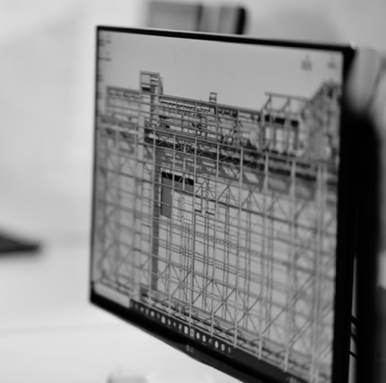
A monitor showing a scaffolded building model

Design

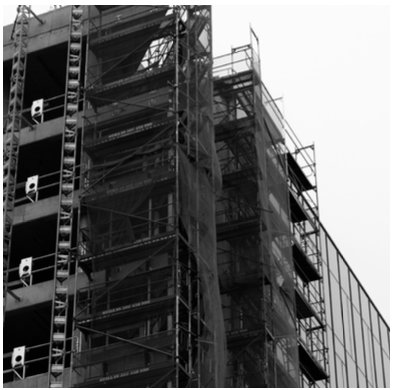
A building under construction wrapped in scaffolding

Construction

People occupying a glazed hall looking out to the landscape

Occupancy

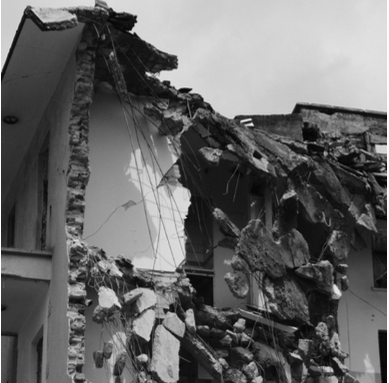
A building in the process of demolition

Demolition

Linear life cycle of traditional architecture

Living architecture life cycle

TetrAgora

Autonomous robotic system for adaptive architectural assembly

Brendan Callan, Irmak Celik, Stelios Galanos, Victoria Hua, Luz Meunier

TetrAgora is an autonomous architectural system that assembles, disassembles, and reconfigures itself over time, giving form to an architecture that is never fixed at completion.

The project responds to the way conventional architecture is treated as a static outcome, complete once built, even as the needs of a site continue to change. TetrAgora proposes an alternative in which a generative AI planning platform, directed through natural language, works alongside a robotic system that builds and rebuilds on site. Quadruped robots traverse irregular, unstructured environments and construct spatial systems that can be occupied, altered, and reconfigured as those needs shift. The modular components keep the architecture reversible: reassembled into new configurations rather than demolished.

To address the finite life cycle of conventional architecture, TetrAgora develops autonomously reconfigurable structures with embodied agency, trained through AI to self-organise and adapt. Buildings are no longer one-time artefacts, but autonomous models capable of continuous change.

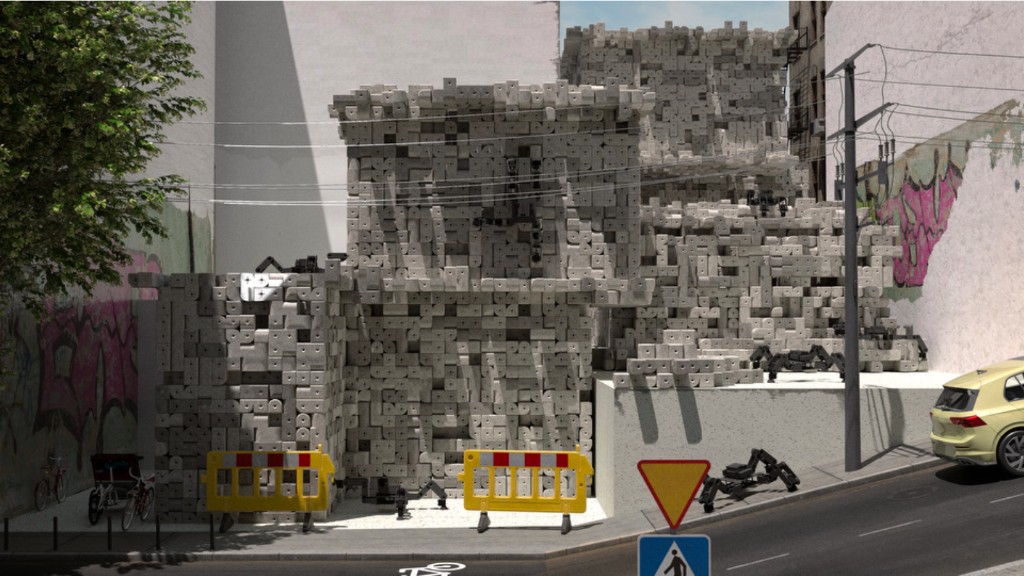
Proposed iteration of TetrAgora on a city street
Proposed iteration of TetrAgora

Precedents

Systems architecture

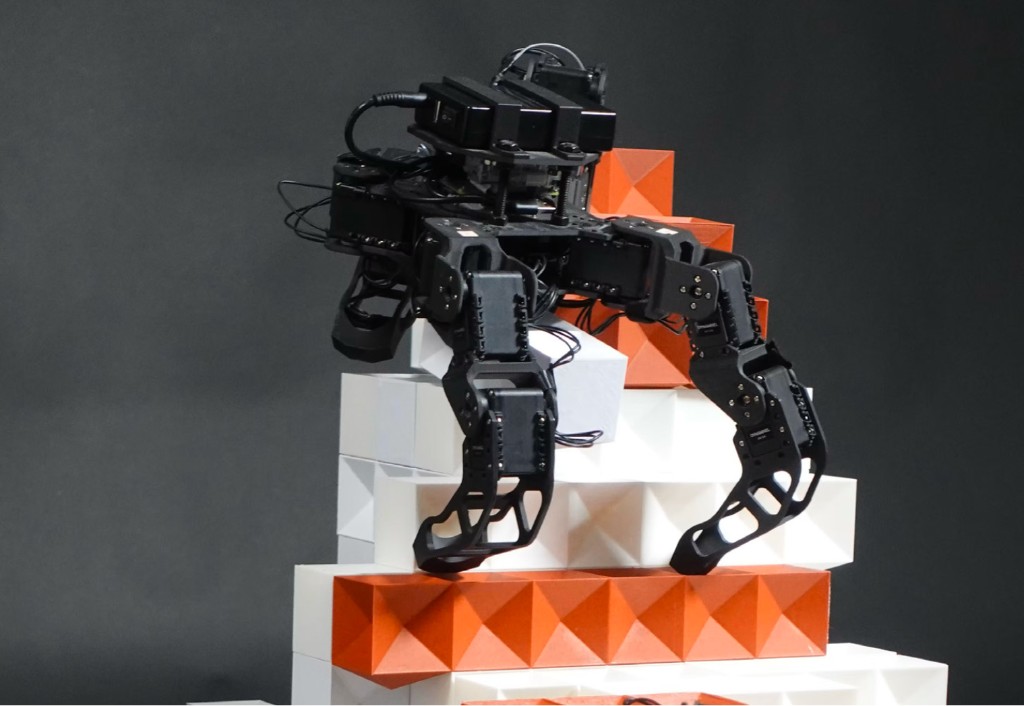
  • A quadruped robot assembling orange and white modular blocks

    Travelisland Drones (Sergio Mutis)

    Coordinated robot teams assemble and reorganise modular units through algorithmic optimisation, creating adaptive structures that evaluate and reconfigure themselves.

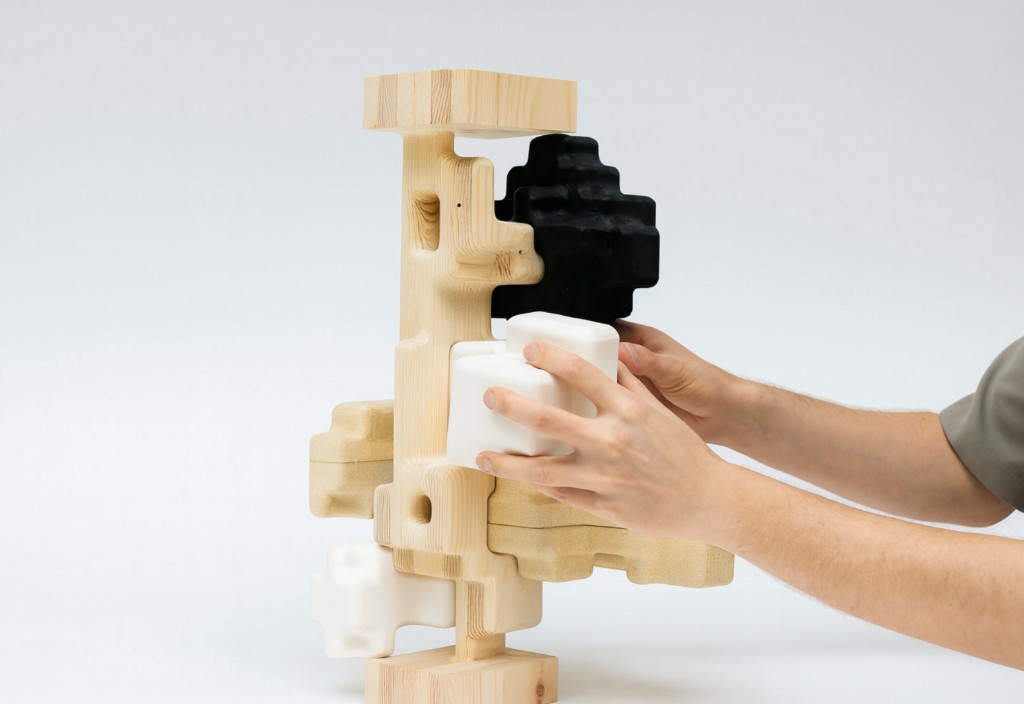
  • Hands assembling interlocking timber and foam voxel modules

    Autopoiesis (ICD)

    Robotic systems carve, print, and reconfigure interlocking voxel modules of recycled matter, forming self-reversing structures that cohere through mutual dependency and adapt to their environment.

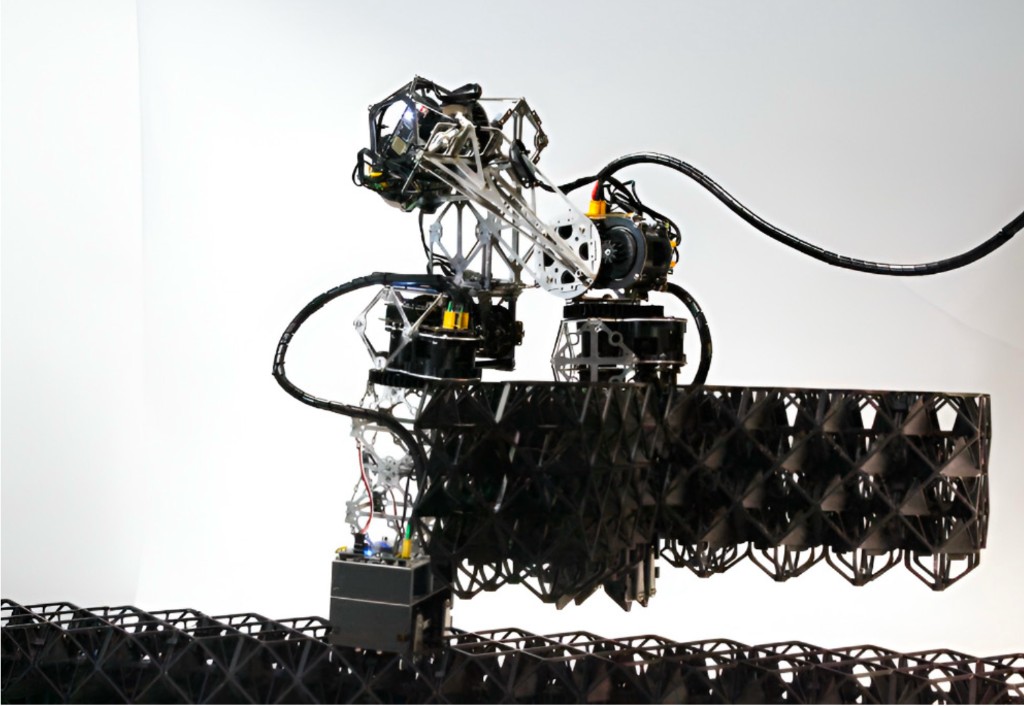
  • An inchworm robot assembling a lattice of voxel cells

    BILL-E (MIT)

    Small inchworm-like robots crawl across a growing lattice, placing self-aligning voxel blocks that snap together without fasteners, assembling structures from a user-defined voxel layout.

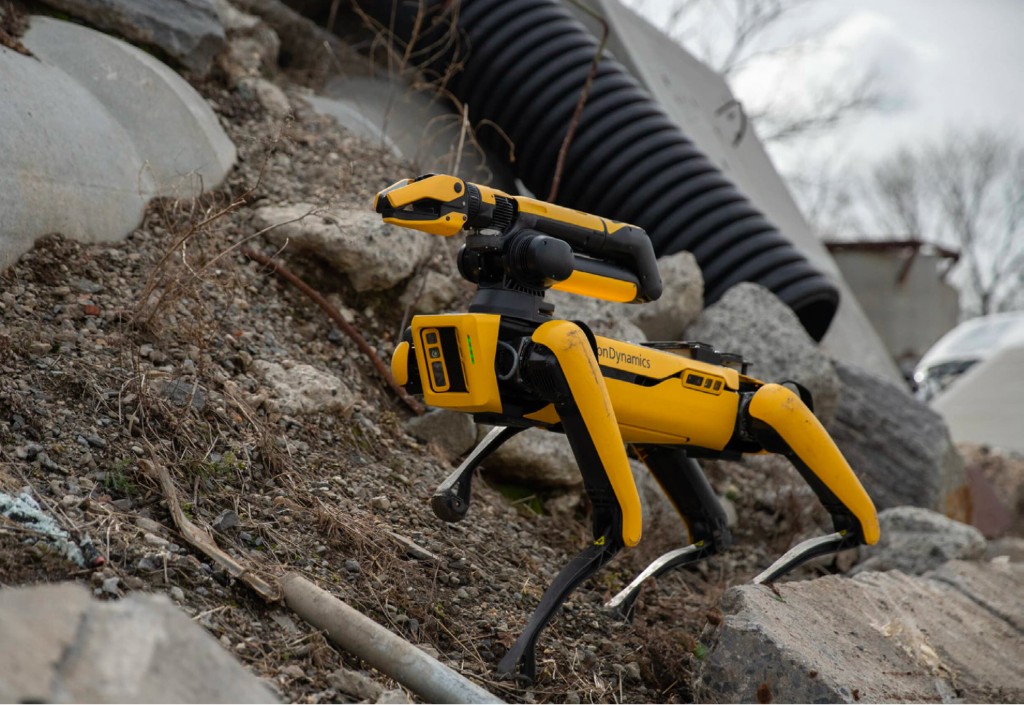
  • Boston Dynamics Spot standing on uneven ground

    Boston Dynamics Spot (Boston Dynamics)

    A quadruped that navigates difficult terrain in unstructured environments, pointing toward distributed, mobile agents whose navigation and spatial awareness determine where assembly happens.

TetrAgora

System workflow

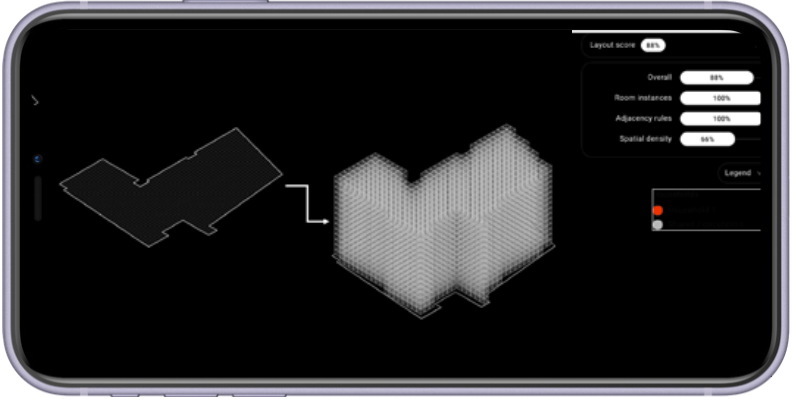
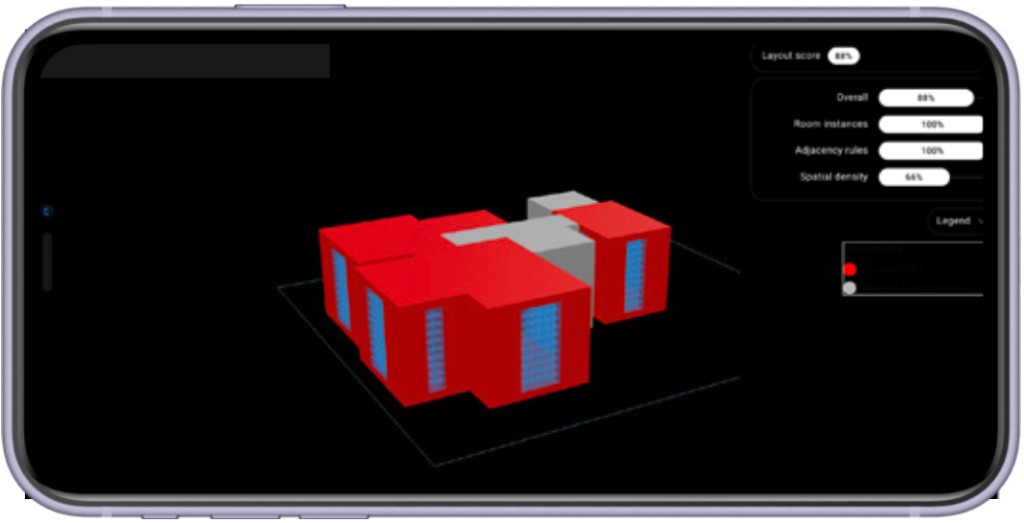
TetrAgora starts with the user, who selects a site to be activated and inputs their requirements into an intelligent spatial planning algorithm. From those inputs the algorithm assembles a library of modular parts into a proposed configuration, reviewed through the interface before it is passed on for construction.

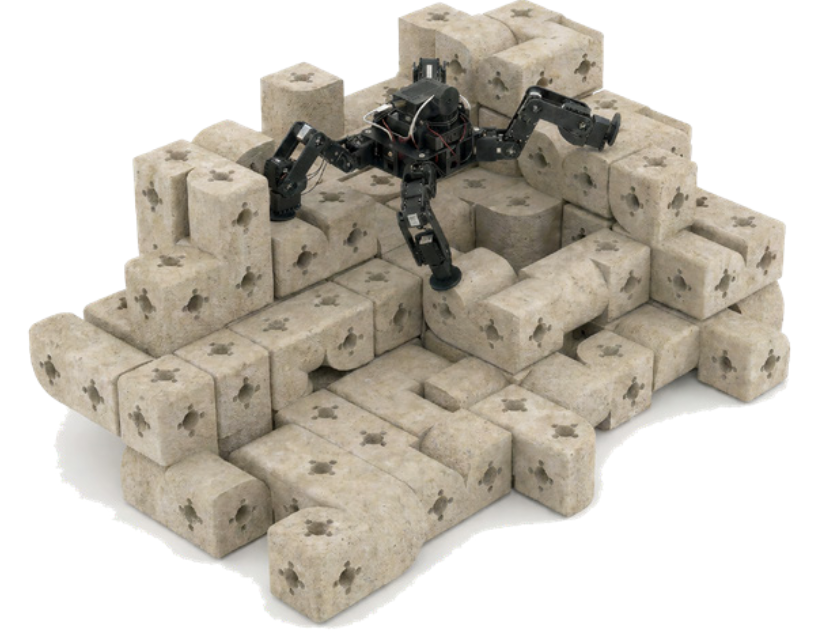
The configuration is then built on site by a collaborative quadruped robotic system and its library of connectable parts. The system learns effective sequences of reversible assembly within the robots' physical constraints, applying machine learning to both reconfiguration and spatial planning.

As the needs of the site change over time, the process returns to the algorithm, where only the affected parts are redesigned and reconfigured. Architecture is not held to the static conditions of a conventional building; it adapts to the people who occupy it and the ways their use of the space changes.

  1. User

  2. Site

  3. Requirements

  4. Phone interface showing a site outline converted into a voxel plan

    Spatial Planning

  5. Phone interface showing a colour-coded building configuration

    Configuration

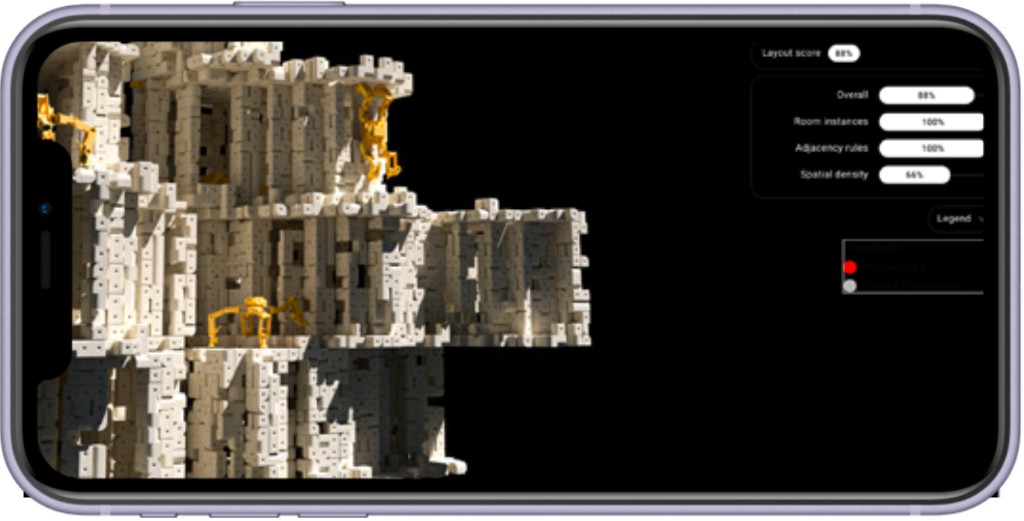
  6. Phone interface showing the assembled voxel building

    Interface

  7. A quadruped robot assembling beige voxel blocks

    Robotic Assembly

  8. Change of Needs

  9. Voxel structure being reconfigured by climbing robots

    Redesign

    loops back to Site

Approach

Three interdependent research threads

The research is divided into three distinct threads, developed alongside and depending on one another.

Algorithmic research consists of two intelligent systems designed to work consecutively. The space planning algorithm interprets the user's requirements and fulfils the objectives demanded of the space, from occupancy to structural stability, while the assembly logic constrains the modular parts by their connectivity into a buildable configuration that can be revised as needs change.

Running alongside it is the material research, which develops the modular components that make reconfiguration possible — geometry that lets the parts recombine, and assemblies designed to be put together, taken apart, and reused rather than discarded.

The third is the robotic research: a quadruped system for these components, covering prototyping, onboard computing and sensing for unstructured sites, adaptive learning for assembly sequences, and a digital twin through which performance is tested and refined.

Computation Systems

A diamond of zeros representing a spatial planning lattice

Spatial Planning

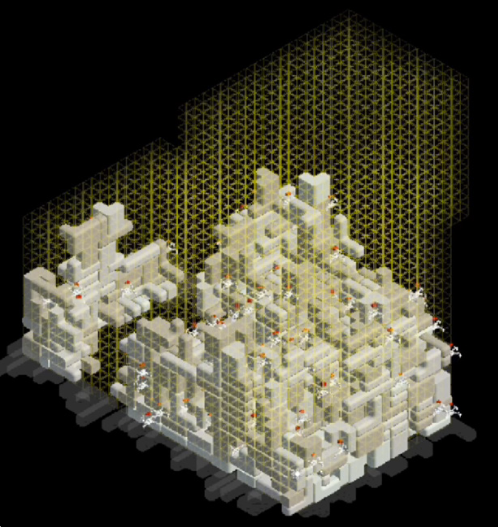
Isometric voxel assembly inside a yellow planning grid

Spatial Assembly

Material Systems

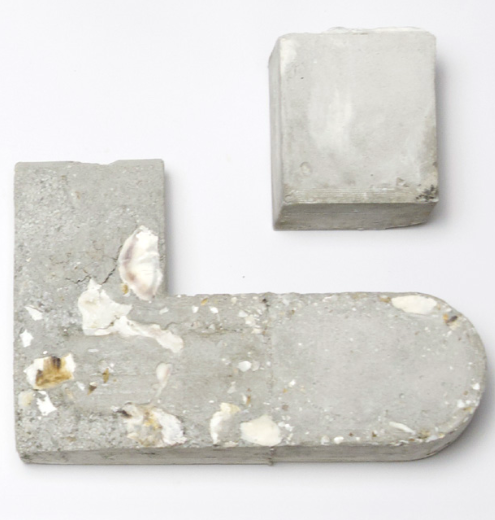
An L-shaped concrete module beside a square unit

Material Research

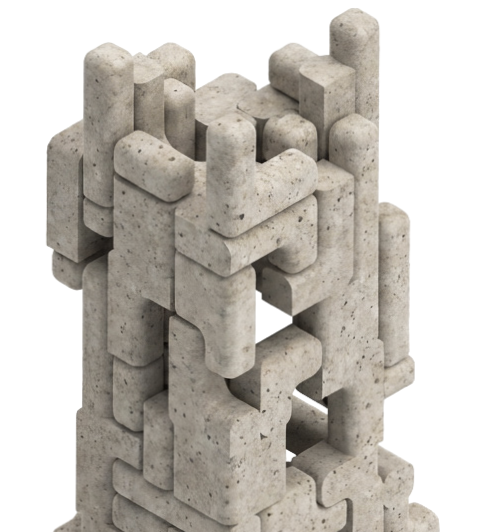
Interlocking beige voxel modules stacked into a column

Geometric Approach

Robotic Systems

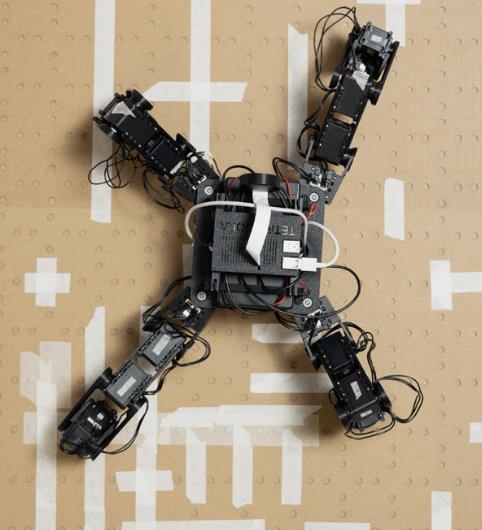
Top view of a quadruped robot on a taped work surface

Mechatronics

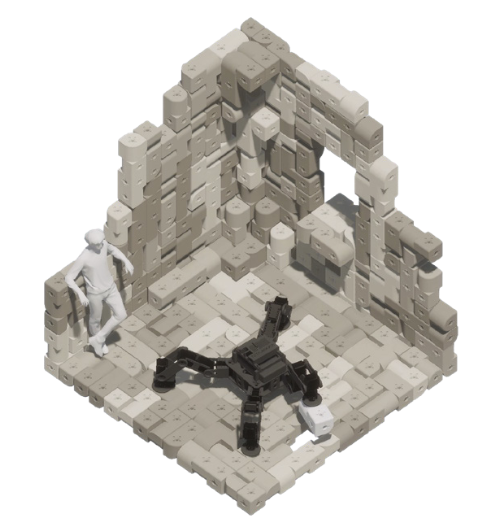
Isometric simulation of a person and robot inside a voxel room

Simulation

Architectural Approach

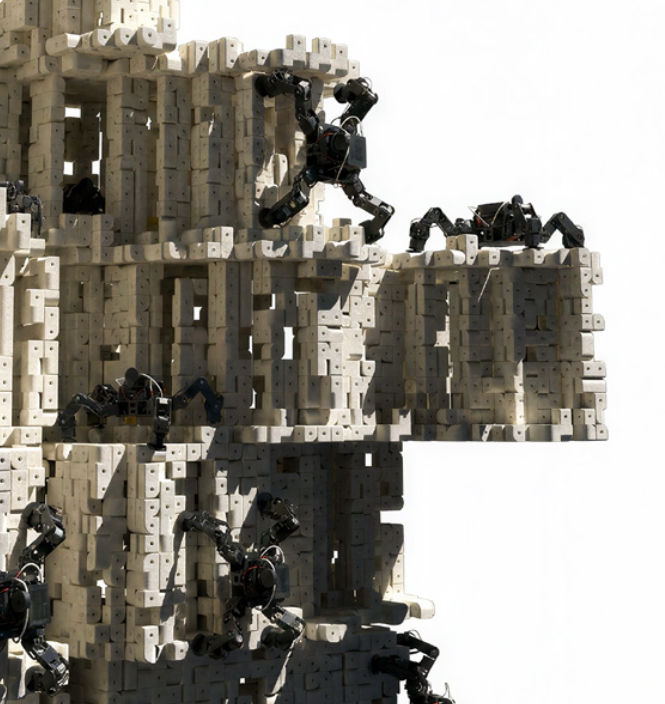
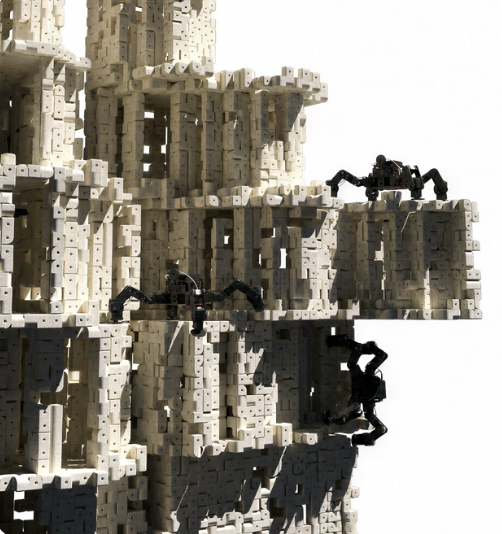
Quadruped robots climbing a voxel facade

Self-Assembly